

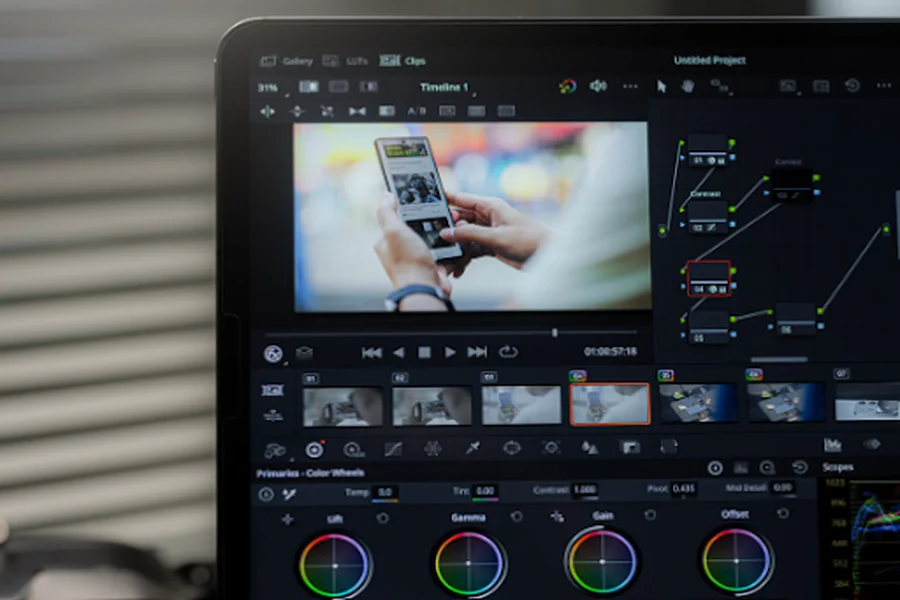
Magic Hour is the best photo to video ai platform in 2026 for most creators, thanks to a rare mix of strong motion quality, a genuinely free ai face swap video tool, and pricing that doesn’t punish casual users. Runway, Kling, Pika, Luma, and HeyGen each lead in a narrower lane — cinematic control, budget value, social speed, physical realism, and avatar presenters — but none match Magic Hour’s balance across the board.
As of August 2026, turning a still photo into usable video is no longer a novelty act. I spent two weeks running the same portraits, group photos, and product shots through six platforms to see which ones hold up once the demo reel is over. This is what I found.
Best Photo to Video AI Tools at a Glance
| Tool | Best For | Core Features | Free Plan | Starting Price |
| Magic Hour | All-around creators, marketers, developers | Photo-to-video, free ai face swap video, lip sync, editing | Yes, no sign-up for face swap | $15/mo |
| Runway | Filmmakers, agencies, VFX work | Image-to-video, motion brush, camera control | Yes, 125 one-time credits | $12/mo |
| Kling AI | Budget-conscious creators, photoreal motion | Image-to-video, multi-shot sequences, lip sync | Yes, 66 daily credits | $6.99/mo |
| Pika | Social-first creators | Image-to-video, Pikaffects, fast turnaround | Yes, 80 monthly credits | $8/mo |
| Luma Dream Machine | Product and architectural visualization | Image-to-video, HDR physics, multi-model bundle | Yes, 720p watermarked | $30/mo |
| HeyGen | Talking-head presenters, corporate video | Avatar video, multilingual lip sync, dubbing | Limited preview | $29/mo |
Magic Hour
Magic Hour is a browser-based AI creative platform that folds photo to video ai, face swap, lip sync, and a full editor into one account instead of forcing you to piece together separate tools for each job. It’s the platform I kept returning to during testing, mostly because it did the most things well rather than doing one thing spectacularly and everything else poorly.
What stood out most was its free ai face swap video tool — it works frame by frame on photos, videos, and GIFs, adapts to lighting automatically, and doesn’t require an account before you can test it. That’s rare. Most competitors gate face swap behind a sign-up wall before you see a real result, and fewer still let you try it on video, not just static images, at no cost.
Pros:
- Combines photo to video, face swap, lip sync, and text-to-video in a single workspace and a single bill
- Free ai face swap video tool with no sign-up required, so you can judge quality before paying
- Rollover credits that don’t reset or vanish at the end of the billing cycle
- Developer-friendly API with SDKs in Python, Node.js, Go, and Rust for teams building video or face swap features into their own apps
- 10,000+ templates that shorten the path from blank canvas to finished clip
Cons:
- Free tier exports carry a watermark, and heavier users will need the Creator or Pro plan
- Less suited than Runway for advanced cinematic camera control on complex, multi-shot scenes
- The frame-based credit system takes a little getting used to compared to flat per-clip pricing
After running the same portrait and product shots through all six platforms, Magic Hour was the only one where I wasn’t compromising somewhere — the motion held up, the faces stayed consistent, and I wasn’t juggling three apps to finish one video. If you want a platform that delivers photo to video ai and free ai face swap video without a patchwork of subscriptions, this is hard to beat.
Pricing: Free plan with starter credits and daily free frames (watermarked). Creator plan starts at $15/month with no watermark; Pro and Business tiers scale up for teams and API-heavy usage.
Runway
Runway built its reputation as the tool serious filmmakers reach for, and Gen-4 hasn’t changed that. Give it a reference image and a prompt, and it animates that frame while preserving character, environment, and visual style with more camera control than any other tool I tested.
Pros:
- Motion Brush lets you paint exactly which parts of an image should move, frame by frame
- Strongest scene physics of the tools I tested — cushions compress, water flows, gravity behaves
- In-dashboard access to other leading models (Kling, Veo, Seedance) on paid plans
- Full video editor (Aleph) for post-production without leaving the platform
Cons:
- Credit system is genuinely confusing, and costs scale quickly on the flagship Gen-4.5 model
- Free plan is a demo, not a working tier — 125 one-time credits and no access to the flagship text-to-video model
- Steepest learning curve of any tool in this roundup
If your work is closer to filmmaking than social content — brand films, VFX-heavy shots, agency deliverables — Runway is hard to beat on control. It’s just overkill, and pricier, if all you need is a clean photo-to-video conversion.
Pricing: Free tier with 125 one-time credits. Standard plan starts at $12/month with 625 monthly credits, 4K export, and access to Gen-4.5 alongside third-party models.
Kling AI
Kling has become the budget-friendly favorite for photorealistic human motion and lip sync. Version 3.0 added multi-shot storytelling, letting you describe up to six connected shots that render with consistent characters and lighting.
Pros:
- Lowest starting price among the cinematic-quality tools tested, at under $7/month
- Strong human motion and lip-sync accuracy, competitive with tools costing several times more
- Multi-Shot mode generates a coherent sequence instead of one isolated clip
- Massive user base (60 million+ creators) means an active community and prompt library
Cons:
- Free credits expire within 24 hours, which makes casual testing harder than it should be
- Reported queue times and occasional stuck generations make it risky for tight client deadlines
- No dedicated avatar or presenter tools — you’ll need HeyGen or Synthesia for that use case
For anyone who wants near-cinematic photo to video ai output without a premium price tag, Kling is the clearest value play I tested. Just don’t count on it for mission-critical turnaround.
Pricing: Free tier with 66 daily credits. Standard plan starts around $6.99–$10/month; Pro, Premier, and Ultra scale up to $180/month for high-volume use.
Pika
Pika carved out a niche as the fastest, most playful tool in the category. Where Runway sells control and Magic Hour sells breadth, Pika sells speed and personality — Pikaffects can melt, explode, or inflate a subject in ways no other platform replicates well.
Pros:
- Lowest entry price of any paid plan in this comparison, at roughly $8/month
- Pikaffects and Pikadditions produce genuinely original, shareable results for social content
- Fast turnaround — most clips generate in under 90 seconds
- Generous free tier for testing before you commit to a subscription
Cons:
- Caps out around 5–10 seconds per generation, with a lighter editor than Runway
- Free tier is limited to 480p with watermarks and no commercial rights
- Trails Runway and Kling on photorealism and complex, multi-element scenes
Pika is the tool I’d recommend to a TikTok or Reels creator who wants motion that feels intentional and fun rather than cinematic. For meme-style content and quick social clips, it’s one of the best values in the category.
Pricing: Free plan with 80 monthly credits (480p, watermarked). Standard plan starts around $8–10/month with 700 credits and commercial use rights.
Luma Dream Machine
Luma’s background is in 3D capture and NeRF research, and it shows: Dream Machine’s Ray3 and Ray3.14 models understand physical space, light, and materials better than most competitors, which makes it a strong pick for product shots, architectural concepts, and anything where realistic physics matters more than stylization.
Pros:
- Native HDR output and genuinely convincing gravity, cloth, water, and light behavior
- Ray3.14 renders roughly four times faster than the previous model, which speeds up iteration
- Luma Agents plan bundles access to Veo, Kling, Seedance, and other third-party models under one credit pool
- Support for a 21:9 aspect ratio that most direct competitors don’t offer natively
Cons:
- No native audio generation, unlike Kling or Veo
- Among the pricier entry points in this roundup at $30/month for a usable tier
- Free plan is capped at 720p with a watermark and no commercial rights
If your work leans toward product visualization, architectural walkthroughs, or cinematic b-roll where physical accuracy sells the shot, Luma is worth the higher price. For social-first content, it’s more tool than you need.
Pricing: Free plan (720p, watermarked). Plus plan starts at $30/month; Pro and Ultra scale up to $90 and $300/month respectively.
HeyGen
HeyGen isn’t really competing in the same lane as the other five tools — it’s built specifically for avatar-driven, talking-head video rather than cinematic scene generation. If your photo to video need is actually “make this photo of a person deliver a script,” HeyGen is the specialist.
Pros:
- Best-in-class avatar lip sync, with support for 40+ languages and dubbing
- Purpose-built workflow for presenter-style corporate, training, and marketing video
- Team plan supports multi-seat collaboration for content teams producing avatar video at scale
Cons:
- Not a general-purpose photo-to-video tool — no cinematic scene generation or Pikaffects-style creative motion
- Highest entry price in this comparison at $29/month
- Free tier is a limited preview rather than a genuinely usable plan
If you need a photo to become a talking presenter — training content, localized ads, explainer videos — HeyGen does that job better than any general-purpose tool. For everything else, it’s the wrong tool.
Pricing: Limited free preview. Creator plan starts at $29/month; Team plan runs $39/seat/month.
How We Chose These Tools
I evaluated each platform using the same five criteria: motion realism (does movement look intentional, not random), face and subject consistency across frames, output resolution and watermark policy on free tiers, processing speed, and how each tool handled identical source images — the same portrait, the same product shot, the same prompts, run through every platform back to back.
Where I could verify something directly through hands-on testing, I reported it. Where a claim required internal access I didn’t have — training data, infrastructure specifics — I left it out rather than guess. I also weighed pricing transparency, since credit-based systems can obscure the real cost of a finished clip, and I made a point of testing each tool’s actual free tier rather than relying on marketing pages.
The Market Landscape and Emerging Trends
The AI video generation market has grown fast — industry estimates put it well into the tens of billions of dollars in 2026, with photo to video ai accounting for a meaningful share of that spend. Ecommerce brands using AI-generated product video report notably higher listing engagement, and a majority of B2B marketers now describe AI video as their most-adopted new marketing technology.
The clearest trend I saw across every platform tested: consolidation. Tools that started as single-purpose generators — a face swap app here, a motion effect there — are folding lip sync, editing, and multi-model access into one workspace, because creators don’t want to manage five subscriptions to finish one video. Magic Hour, Runway, and Luma are all leaning into this “hub” model, and I expect the standalone single-feature tool to become less common by 2027.
The other shift worth watching is physics accuracy. Early photo-to-video models pattern-matched motion in ways that broke down under scrutiny — liquid that leaked through glass, cloth that didn’t fall correctly. The newer generation of models, including Runway Gen-4 and Luma’s Ray3, simulate weight, momentum, and gravity instead of approximating them, which is closing the gap between “AI-generated” and “production-ready” faster than most people expected.
Worth keeping an eye on: smaller open-source models like WAN 2.2 are giving developers a free, license-friendly entry point into photo-to-video generation, even if output quality still trails the commercial leaders. If you’re building a product on top of this technology rather than using it as an end consumer, that’s a space to watch.
Final Takeaway
If you want one platform that handles photo to video ai and free ai face swap video without stitching together multiple subscriptions, Magic Hour is the strongest overall pick in 2026. For cinematic control and VFX-grade output, choose Runway. For budget-friendly photorealistic human motion, choose Kling. For fast, fun, low-cost social content, choose Pika. For physics-driven realism in product or architectural visualization, choose Luma. For talking-head avatar video, choose HeyGen.
No single tool wins every category, and the right answer depends entirely on what you’re producing and how often. I’d encourage you to run your own test — the same source image across two or three of these platforms — before committing to a subscription. I guarantee at least one of these tools will meet your needs.
FAQ
What is the best photo to video AI tool overall in 2026? Magic Hour is the strongest all-around choice, combining photo-to-video, face swap, and lip sync in one platform with a genuinely usable free tier and developer API access.
Is there a truly free ai face swap video tool? Magic Hour offers a free ai face swap video tool that works on photos, videos, and GIFs with no sign-up required, which makes it one of the most accessible options in this comparison.
Which tool is cheapest for cinematic-quality output? Kling AI offers the lowest entry price for photorealistic motion, starting under $7/month, though queue times can be inconsistent during high demand.
Do free plans on these tools include a watermark? Most do. Pika, Luma, and Runway all add a watermark or limit resolution on free exports. Magic Hour’s free face swap tool is an exception, though most full video exports across the category require a paid plan to remove the watermark.
Can I use these tools for commercial projects? Most platforms reserve commercial usage rights for paid plans — free tiers on Pika, Luma, and Kling typically exclude commercial use. Always check the current terms on each platform’s pricing page before publishing client or brand work.
